What Happens After an ADHD or Autism Diagnosis?
Double-click to edit...
We know so many of our clients are exploring the possibility of being neurodivergent, seeking an ADHD or autism assessment, or processing the confirmation of a diagnosis.
While the wait times to get an appointment can be long, the diagnosis process itself can sometimes feel surprisingly fast, abrupt or unexpected, no matter how long you’ve been preparing for it.
You might be told you meet the criteria, offered treatment options or medication, and then find yourself wondering what happens next.
Many of the women we meet tell us they weren’t offered much guidance about what other support might be helpful.
And we’re often meeting clients who are like, “Um, what about EVERYTHING ELSE?”
Because there’s so much more to process than receiving a diagnosis that didn't fit into the 15 minute follow up consults.
The grief, the brilliance, the What ifs? and the Where to now? questions.
The realisation that your experiences might look very different from the stereotypes, and that neurodivergence is so much more complex than a ‘funny’ ADHD TikTok.
There is so much diversity in neurodiversity! Just when you think you've found a label that helps, you unlock 234,098,235 other doors of diversity.
It might look like constantly forgetting things, feeling overwhelmed by everyday tasks, struggling to switch off, or wondering why life seems to require so much more effort than it does for other people.
But often, it’s a much deeper experience that colours your Inner World, not just the ‘quirky’ things everyone comments on.
For some women, a diagnosis brings enormous relief. For others, uncertainty, self-doubt, grief or even a sense of disbelief. Sometimes all of these feelings arrive together.
And this is the chapter that can get missed.
A diagnosis can name your experience without necessarily helping you understand what it means for your life.
You may begin revisiting your childhood, relationships, work, friendships and the stories you’ve carried about yourself. Things you once understood as personal failings may start to look different, while new questions emerge about your needs, capacity and future.
It’s not simply about learning new information. It can involve reimagining your relationship with yourself.
And that takes time.
If you’re finding this journey complicated, we want you to know that there’s no single right way to feel about it.
You don’t have to immediately embrace a new identity, make sense of every experience or know what comes next.
If you have safe people or neurodivergent friends to talk with, those conversations can be incredibly helpful. But we also know that some women are navigating this privately, without anyone who quite understands what they’re going through.
You deserve space for the questions, the uncertainty and the parts of your story that are only just beginning to make sense.
If you’re somewhere in this process, here are a few questions you might gently explore.
You don’t need to have answers, and you certainly don’t need to figure it all out today.
What parts of my life make more sense to me now?
What have I spent years believing was a personal failing?
What needs have I learned to ignore or push through?
What strengths or abilities might I have overlooked?
What might change if I stopped asking myself to function like everyone else?
You might find yourself sitting with one of these questions for a while. Or you might have a hundred more. That’s part of the journey, too.

And if you'd like some support exploring these questions, this is where our neuroaffirming counselling comes in.
Our approach isn’t about trying to “fix” your brain. It’s about understanding how your mind works, recognising the strengths and adaptations you’ve developed, and exploring practical strategies and environments that genuinely support you.
It’s also about having a relationship where you feel comfortable enough to unmask, release some of the pressure to act neurotypical, and explain what’s happening in your Inner World without feeling you have to justify it.
Our own AuDHD therapist, Bindi Forrester, brings both professional expertise and lived experience to this work.
She supports women navigating ADHD, autism, AuDHD, burnout, masking, grief and the questions that can come with discovering your neurodivergence later in life.
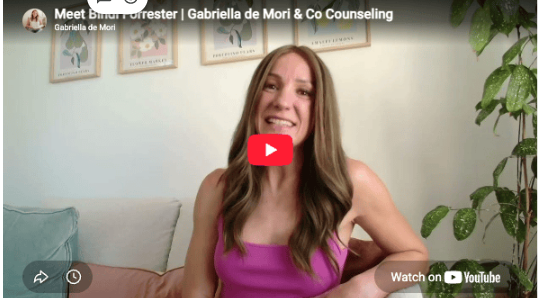
Beyond a diagnosis, we’re here to support the journey before, during and after. Curious what it's like to sit down with Bindi?
Enjoy her welcome video below. It's a lovely way to get a feel for her approach and the person behind the counselling room.
In our next article, “Why you think you scammed your psychiatrist for your ADHD diagnosis” Bindi shares her personal experience with her diagnosis, why she doubted it all and what turned out to actually help.
Keeping it spicy,
Gabriella de Mori
Founder & Director
Registered Clinical Counsellor
Gabriella de Mori & Co Counselling
Ps. In bonus news, Bindi is welcoming new clients. To enquire, simply complete the form on Bindi's page here.